
Light at Every Scale: How Lighting Defines Proportion and Place
When we talk about lighting design, ceiling height doesn’t always get the spotlight—but it should. The vertical dimension of a space plays a huge role in how light behaves, how comfortable a room feels, and how people experience it emotionally.
The same lighting plan applied to two rooms with different proportions can feel intentional in one and completely off in the other. Good lighting design isn’t just about how much light you add, but where and how it interacts with the architecture.
Lighting Spaces with Low Ceilings
In rooms with low ceilings, the biggest challenge is avoiding visual compression. Heavy fixtures, oversized pendants, or poorly placed downlights can make a space feel shorter than it actually is. Here, lighting should work to visually lift the room.
Wall washers, cove lighting, and indirect uplighting help draw the eye upward and create a sense of openness. Recessed fixtures can still work, but they need to be carefully selected—and good glare control is key. The goal is to keep the ceiling feeling light and unobtrusive, not cluttered or heavy.

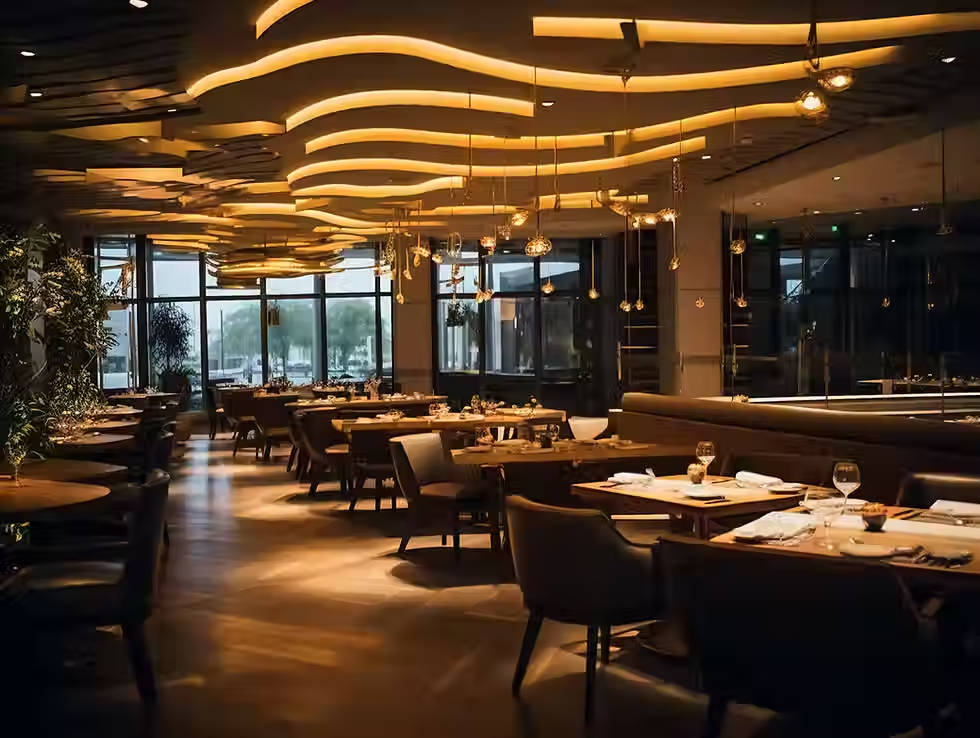
In this photo we see how lighting creates different areas of visual interest. From the cove light, decorative sconces, to the chandelier, the eye is drawn to different textures and areas within the space, expanding it rather than flattening it.
Illuminating walls evenly makes a room feel taller and more balanced, while relying only on overhead light can flatten the space. This is one of those situations where less can truly be more: fewer fixtures, placed with intention, often outperform a ceiling packed with downlights.

Lighting Spaces with Tall Ceilings
High ceilings present the opposite problem. Instead of feeling compressed, these spaces can feel distant, cavernous, or emotionally cold if lighting isn’t handled properly.
Simply increasing brightness rarely solves the issue. What’s needed is a way to bring light—and attention—back down to a human scale. Pendants, chandeliers, and suspended fixtures help visually anchor the space, while mid-level lighting such as sconces or table and floor lamps creates layers that connect the ceiling to the floor.
In tall rooms, vertical lighting becomes a storytelling tool. Highlighting columns, textures, or architectural details adds rhythm and breaks up large expanses of wall. Without these layers, light tends to pool at the ceiling or floor, leaving the space feeling disconnected in between. The best high-ceiling lighting designs acknowledge the height but don’t let it dominate the experience.

Room proportions matter just as much as ceiling height. A long, narrow space needs a different lighting rhythm than a square one. Repeating fixtures too evenly can exaggerate awkward proportions, while strategic grouping or variation can visually rebalance the room.
Lighting can widen a space, shorten it, soften it, or give it structure—sometimes without the viewer even realizing why the room feels “right.”
What all of this comes down to is harmony between light and architecture. Lighting shouldn’t fight the room’s proportions or try to disguise them completely. Instead, it should work with what’s already there, subtly correcting imbalances and enhancing comfort.
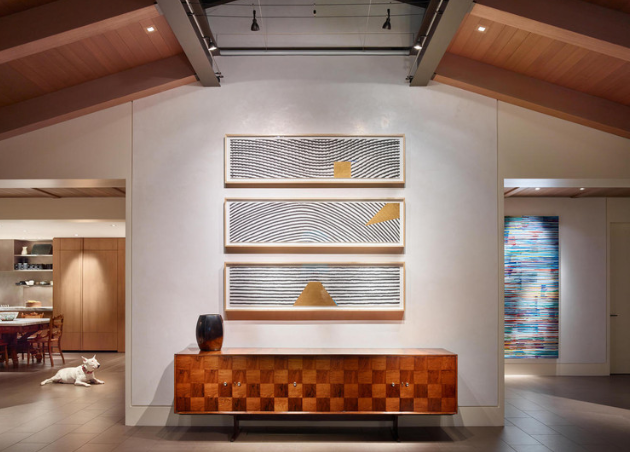
When ceiling height and proportions are properly considered, lighting stops being just a technical necessity and becomes a quiet but powerful design tool—one that shapes how a space feels long before anyone notices the fixtures themselves.
At Prism Lighting Design, we bring a practiced eye to complex ceilings and challenging proportions, crafting lighting solutions that harmonize scale, function, and atmosphere—so every space feels as right as it looks: comfortable, intuitive, and effortlessly livable.
Please share and subscribe!
-Written by Vivian Priestley, For Prism Lighting Design


Comments