
Why is Everybody So Afraid of the Dark?
One of the most common questions we hear from clients is, "Will there be enough light?" It's a perfectly reasonable concern—but it isn't always the most helpful question when evaluating a lighting design.
As lighting designers, our goal is never to fill a room with as much light as possible. It's to create spaces that feel comfortable, functional, and visually interesting. Those are very different objectives.

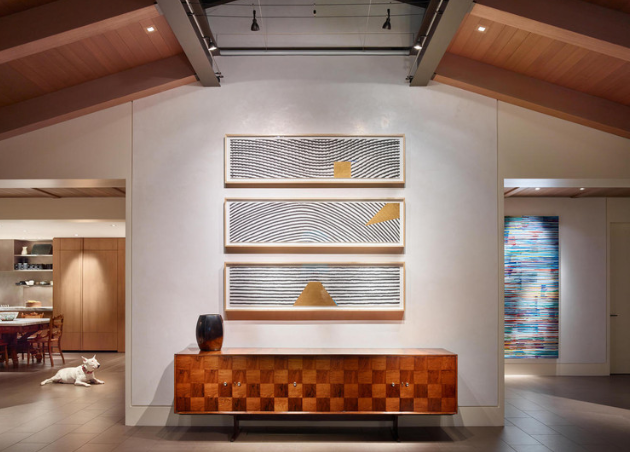
In this kitchen, the designer strategically places downlights only over the primary work surfaces rather than in a uniform grid across the ceiling. This approach provides the task lighting needed for cooking while preserving visual interest, drawing the eye to the room's textures, materials, and architectural focal points instead of creating a blanket of light.
Fortunately, recommended lighting levels have been developed over decades by the Illuminating Engineering Society (IES), providing valuable guidelines for designers. These standards help ensure spaces have adequate illumination for the tasks they support. But lighting is also deeply personal. Every project, material palette, and homeowner is different, and good lighting often requires looking beyond the numbers.
One of the most common mistakes we see is over-lighting a space. While it may seem like adding more fixtures guarantees a better result, the opposite is often true.

This kitchen lighting layout takes a very different approach from the previous example. A dense grid of recessed downlights creates a busy, distracting ceiling. While the result is bright and evenly illuminated, it competes with the architecture rather than complementing it, flattening the space and diminishing its depth and character.
A room filled with uniform, even light can begin to feel flat or sterile. When every surface is illuminated equally, the subtle contrast that gives architecture its depth and character begins to disappear. Natural shadows aren't something to eliminate—they're an essential part of how we experience a space. They guide our eyes, emphasize texture, and create a sense of warmth and comfort.
Over-lighting also has practical drawbacks. More fixtures typically mean higher construction costs, greater energy use, increased maintenance, and a ceiling crowded with recessed lights. We've all walked into spaces where the ceiling resembles a grid of glowing dots. Instead of disappearing into the architecture, the lighting becomes the first thing you notice.
Thoughtful lighting uses fewer fixtures with greater intention.
Rather than asking whether there is enough light, we encourage clients to ask different questions:
· Where should the eye be drawn?
· What activities happen in this space?
· Which architectural features deserve emphasis?
· Where should the room feel calm, dramatic, or intimate?

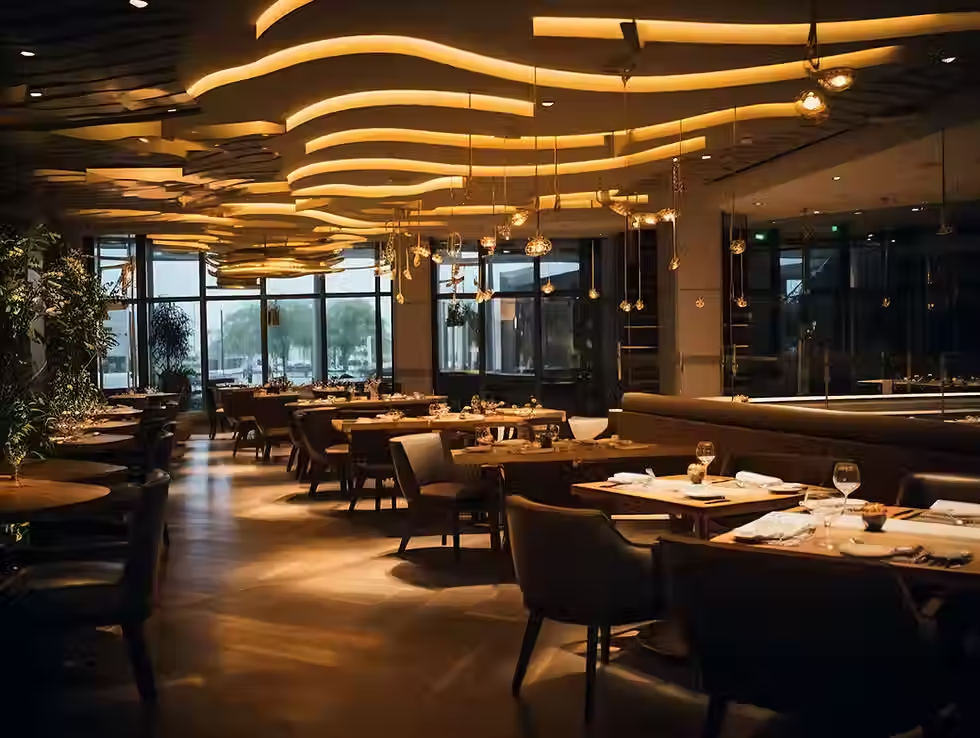
The best lighting designs don't strive for perfectly even illumination. They create balance. They layer ambient, task, and accent lighting to provide light where it's needed while allowing the architecture to breathe.
Sometimes, designing with less light creates a space that feels infinitely more inviting.
At Prism Lighting Design, we prioritize the quality of light over the quantity of fixtures. We aren’t afraid of the dark—in fact, we see it as an essential tool for creating depth, contrast, and layers within a space. We strive to create environments that feel warm, personal, and lived in, where the lighting doesn’t demand attention, but the thoughtful balance of light and shadow quietly makes a space feel like home
Please share and subscribe!
-Written by Vivian Priestley, For Prism Lighting Design

Comments